Wednesday, May 28, 2014

Da Lagers of Southeast Asia

Having completed our trip to Myanmar, we now feel that we can claim a certain amount of expertise when it comes to the beers of Southeast Asia. We've put together a Top Ten List to guide you through the lagers - for they are almost invariably lagers - of the region.

We suspect that the tropical climate is one of the chief reasons behind the prevalence of lagers, and the dearth of dark beers, in SE Asia. When the temp hits 30 degrees (Celsius), you're going crave an icy, light-colored beer that goes down easy; save that stout for a colder weather.

Top 10 Lagers of Southeast Asia

1. Beer Lao, Laos

Deciding the rankings was not easy, but Beer Lao is far and away the best beer in Southeast Asia. It has a rich flavor with caramel notes, yet maintains a crisp, clean finish. It's perfect as a refreshment after a hot afternoon of sightseeing, or if you need a hearty beverage to accompany your Laap (spicy minced pork/beef salad) on a cooler evening. The real kicker is that Beerlao also makes the best dark beer in the region. Their Stout might have taken second place if we weren't being so generous to the other brands. Beerlao also is the gentlest on your head the next morning. To top it all off, it's less than $1 for a glass, which means any time is a good time for Beerlao.

Fondest memory: Sipping cold Beer Lao while floating lazily up the Mekong in Luang Prabang, Laos, with Kate Virkler & Enes Kadic.

2. San Miguel, Philippines


San Miguel is great, clean, refreshing and consistent. It always hits the spot when you're in the Philippines. They also make the best light beer in Asia, which is easier to sip after a day of clambering up volcanoes.


Fondest memory: Drinking San Miguel and gazing out at Taal Volcano - the lake within an island within a lake - which we had just climbed with our new travel friend, Francois.

3. Chang, Thailand


Chang is a close front-runner with San Miguel. It's a tad sweeter with a fine carbonation, which is delicious but it also makes it a bit less flexible - if it's super hot, it's not as refreshing. Hence, the third-place finish. We enjoyed it immensely in Thailand, and it is also one of our favorite beers available in Singapore. It also has maybe the prettiest logo! 


Fondest memory: Dinner in the 'Tin Shed' in Bangkok. We were taken to this restaurant, which appears to be an auto repair shop by day, by a friend-of-a-friend whom we met. The meal and the beer were delicious and affordable - a theme among our fondest memories, I'm realizing.

4. Vietnamese Lagers - Hanoi, Saigon, La Rue & Halida


Vietnam had the nicest selection of domestic beers to choose from, and they were all winners. Depending on your feelings about the Vietnam War, you can enjoy a Saigon or a Hanoi - or both, in this country which we found to be so welcoming of us, despite a painful history. Unfortunately, due to some nasty head colds, we Da Lagers weren't able to drink enough of all of them to truly compare and pick a favorite. It was nice to drink beer in a cooler climate again!

Fondest memory: Lunch with the Dalager seniors on a balcony overlooking a bustling Hanoi intersection. We also would have enjoyed a few beers, if not for the aforementioned colds, on our Hanoi Food Walking Tour later in the trip - though I'm not sure if that could have been any better than it already was!

5. Myanmar & Dagon Beer, Myanmar

For a country that's only opened it's borders to the world in recent years, their beers are really impressive. The national, Myanmar Beer, is a solid choice even when it's 110 degrees. And the regionally-named Dagon Beer gives Myanmar Beer a run for its Kyat (money)! 


Fondest memory: Persuading our driver to pull off at a little roadside restaurant for Dagon draughts, and enjoying a Myanmar while playing cards in the hotel's cafe in the evening.


6. Angkor & Cambodia Beer, Cambodia


As we get further down the list, the quality of the beer obviously diminishes, but the memories do not. Angkor and Cambodia beers are, to be honest, not very special. But after a day of exploring ancient temples and mysterious ruins, they feel special!


Fondest memory: A rousing round of Cambodian put-put with Holly & Karl Dalager, complete with miniatures of the Angkor Wat temples, $1 beers, and the enthusiastic participation of our tuk-tuk driver, Pon. Holly also got a hole-in-one, but she was the only one not drinking Angkor - which probably contributed to her success.


7. Singha, Thailand

Singha is often contested to be the better Thai beer (over Chang). I think it comes down to how you're feeling at the moment. Singha is better as a refresher. But Chang has got better flavor. In the end, Singha received the lower ranking here because it is always seems to be a little more expensive than Chang. Boo!


Fondest memory: Sipping Singha at our mini St. Olaf Band reunion with D.J. & Kate (and honorary bandies Victoria & Enes) in Chiang Mai, Thailand.


8. Tiger, Singapore

Tiger beer is promoted as the fancy, quality beer of Southeast Asia. But, honestly, it's not. It's pretty bad actually, but surfs on the reputation of being from modern, expensive Singapore. One of it's worst faults is it's really inconsistent. A draught will taste totally different than a can or a bottle. And each will give you a different hangover! Our negative feelings stem, in part, from the fact that we normally purchase this in Singapore, where a tall bottle will cost $6+ at a hawker, or a nauseating $10+ at restaurant!

Catchphrase: Ride the Tiger!*
(Some of these lesser beers have earned themselves catchphrases, which are in no way affiliated with the actual brand!)


9. Bintang, Indonesia


Bintang is cheap. Very cheap. But that's about all it has going for it - that, and being the only widely available domestic beer in Indonesia.

Fondest memory: Popping the top on some icy Bintangs while relaxing on Legian beach with Anna & Erich Lippert in Bali, Indonesia.
Second fondest memory: Waiting for our boat to Samosir Island in Lake Toba, Sumatra - one of the chillest places we've ever been.

10. Anchor, Singapore

"Smooth" might be an ambitious slogan for this beer, which is most often found in convenience stores or at hawkers, sold for deals that should make you suspicious. It is serviceable, but I might opt for a soda instead.

Catchphrase: When you're about to start imbibing, you yell, "Anchors aweigh!" Dropping Anchor is what happens later...

Fondest memory: honestly, it is better when you forget.


Honorable Mentions

Bia Hoi (Vietnam)


More available during the summer months, Bia Hoi is a very light (3% abv), very bubbly beer drawn from small kegs in small shops and roadside stalls. Popular among local, we got two glasses for a dollar! Not much flavor, but cold and refreshing as anything - and with the low alcohol content, you can sip away the afternoon and on into the evening.


Asahi Super "Dry" (Japan)

It doesn't make the list because it is from East Asia, but is often available in Singapore and was especially enjoyable when purchased at 7/11 and slurped between sets when we performed with the Thomson Big Band outside of Marina Bay Sands.

Mandalay (Myanmar)

It's a strong beer and not a bad choice if you can handle the extra punch; beware when drinking in 100 degree weather though!


Dishonorable Mentions

Leo

Brewed from the dung of Tiger Beer and most often found in 7/11's, don't drink unless you are a Leo, or have an antidote!

ABC Extra Stout 

Actually NOT a lager. And actually not very good. "It's queasy as ABC"

Bali Hai & White Horse

Mysterious, cheap beers from a grocery store in Bali. They get especially poor marks because they thwarted the $.50 bottle opener we bought - and once we had them open, we wished we didn't.

Dester

Technically not from SE Asia, the bottom spot is reserved for this Korean beer.
But if you must drink it, then, 

"Embrace you Desterny!!"


Monday, May 19, 2014

Let's go to Bago!

You can see Yangon and Bago
(which is a state and a town).
On our second day in Myanmar, we arranged a driver to take us about 2 hours (only 65km - traffic!) north to the town of Bago, where there are more stupas, Buddhas and temples than you can shake an offering at. It was another very sunny scorcher of a day, so having an air conditioned car to jump into after each stop was quite the luxury. Our driver, Myo Chit, was very helpful and knowledgeable (plus a skilled and patient driver)!

Interesting side note - many of the cars in Yangon have been retrofitted to run on natural gas, which costs far less than gasoline. Gasoline prices were just about the same as in the US - which is incredibly steep when you consider that the per capita GDP for Myanmar is $1,711 - compared to the US per capita GDP of $52,852! But I digress...


Most of the graves were for British soldiers.


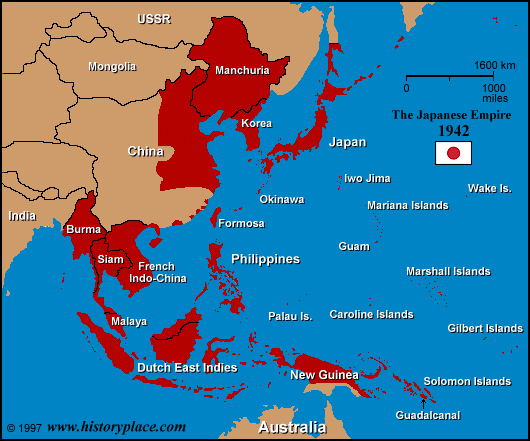
On the way there, we stopped off at a World War II memorial, which once again reminded me just how little I've ever learned about the 'Pacific Theater' of WWII. I had no idea how much of Southeast Asia was occupied by the Japanese - Indochina, Siam, Burma (now Vietnam, Cambodia, Laos, Thailand & Myanmar), down the Malay peninsula all the way to Singapore, and branching out to the island nations of Indonesia, Philippines, and Borneo. Makes me realize that all my WWII education has been almost exclusively Euro-centric! What about you? 

These gorgeous red trees were
blooming all over the region

The inscription says "They died for all free men" in multiple languages.


A few kilometers outside Bago we stopped off at the four-facing Buddhas. I tell you - they like their Buddhas big here. Big and gold. Most of the pagodas/payas/stupas/Buddhas are intended to be circled in a clockwise direction, and all around the central structure there are smaller statues, shrines, and places for prayer and offering. The day of the week you are born appears to be the most salient factor in horoscopes and aspects of worship here, and there are small shrines for each day of the week - and two for Wednesday, morning and evening. 


Buddha and his buds had majorly tricked out nails. Love it!
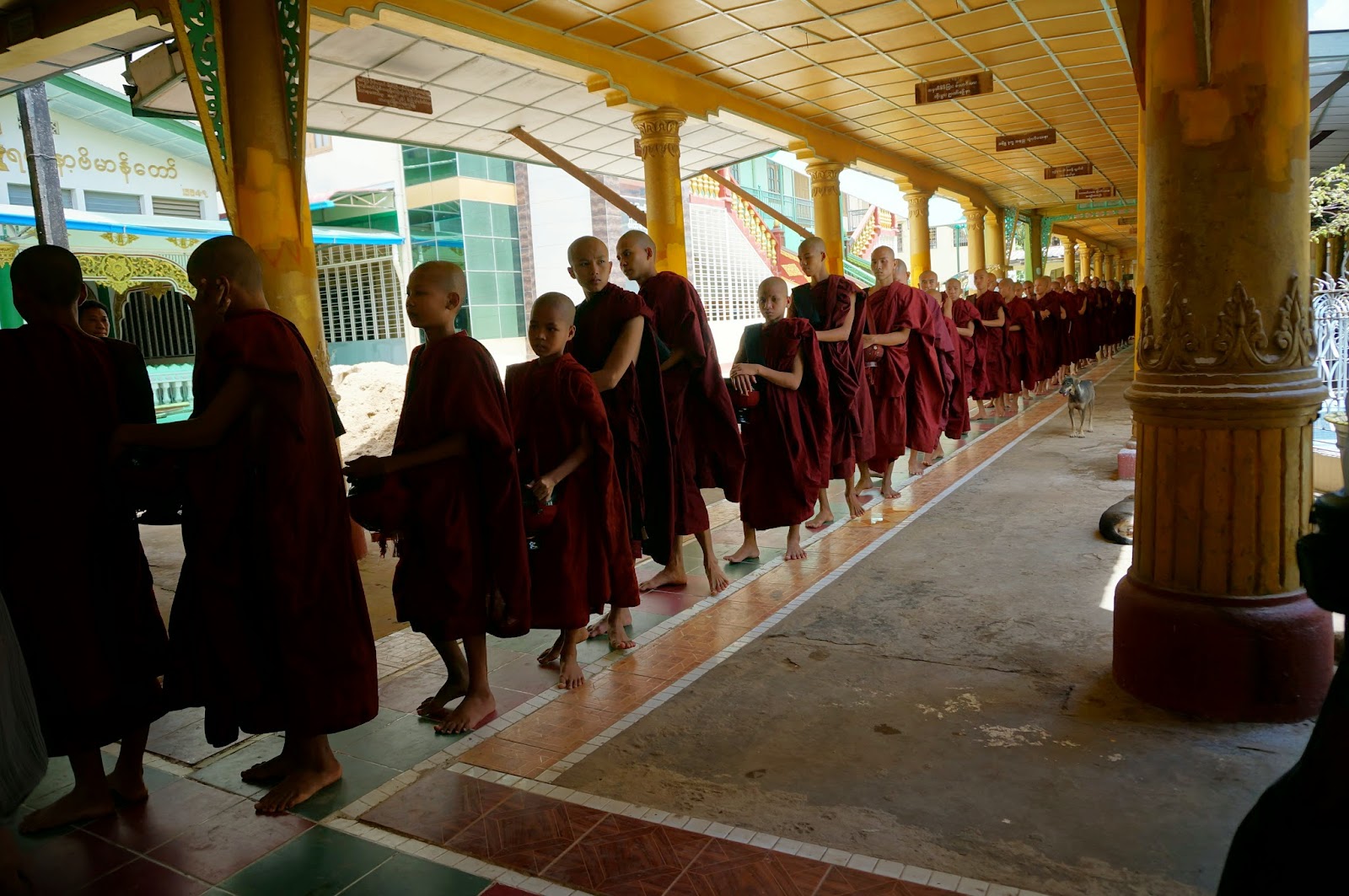
This is an alms bowl that a monk will
carry around, collecting rice.
That is a LOT of rice -
look at the size of the pots
in the other picture!

We went next to a monastery, arriving just at lunch time. It was both neat and a bit weird to stand around with other tourists to watch the monks go about their daily business - but if they really minded, I guess they wouldn't encourage people to come? 


From there we went on to another large golden pagoda - though honestly the pictures look much the same! Even the names are a bit hazy already - it was hot, after all! I loved this picture - kind face.

Next up was a huge golden palace - stunning! This has been restored from almost total ruin, but inside they had huge logs from the original structure that had lined the throne room - the King who built the palace was famous for uniting many tribes, and the teak logs were sent from all over the country.


Throne room - these are royal golden spittoons!
This is a classy joint - you can't just spit it on the floor here!

We stopped for lunch and begged Myo Chit to help us find lephet thoke - a popular salad made of pickled tea leaves, tomatoes, peanuts, crispy fried beans, cabbage, raw garlic, chillies (optional) and a generous dollop of oil. It is hard to describe and might not sound good - but holy smokes, this stuff is amazing! Jacob says it is one of his top five favorite foods of all time. We had two orders of lephet with rice, and finished off with another helping of the plain salad. When we saw Myo Chit the next day, he warned us that we should not eat the salad again because we'd already had too much and would probably 'have troubles' - I think that was a kindly way of saying we'd be running for the Imodium.

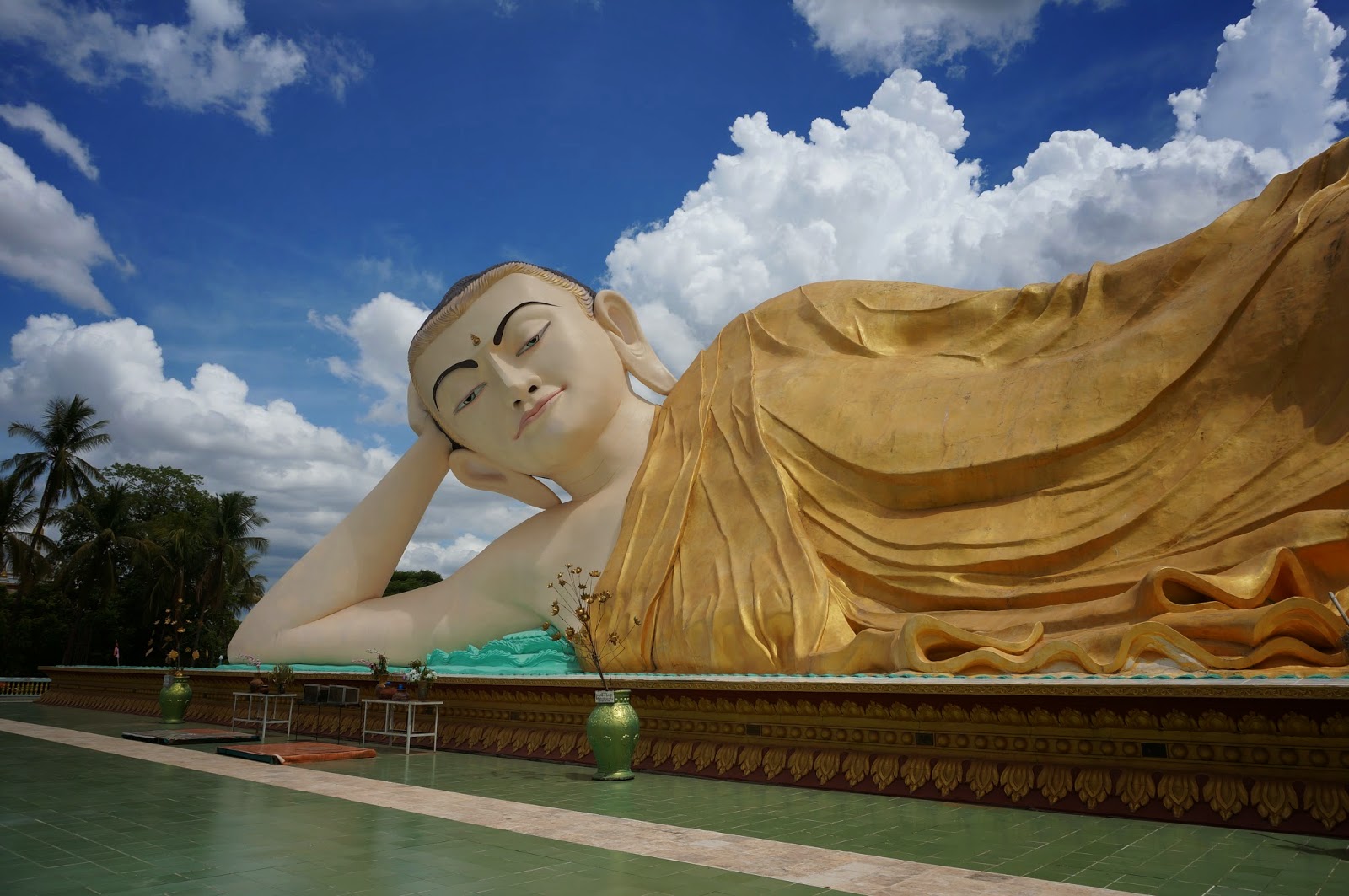
Next we went to see a giant reclining Buddha - two, actually, one indoors and one outdoors.


The soles of the feet are usually my favorite part,
as they are often incredibly ornate.
Someone was seriously in love with their Bedazzler!


Looks pretty relaxed, huh?
I think this finally helps capture the enormity of these statues!
If I look like I'm about to jump, it is because you have to walk
barefoot and the tiles were burning my feet!
(Again, check out Buddha's toes!)
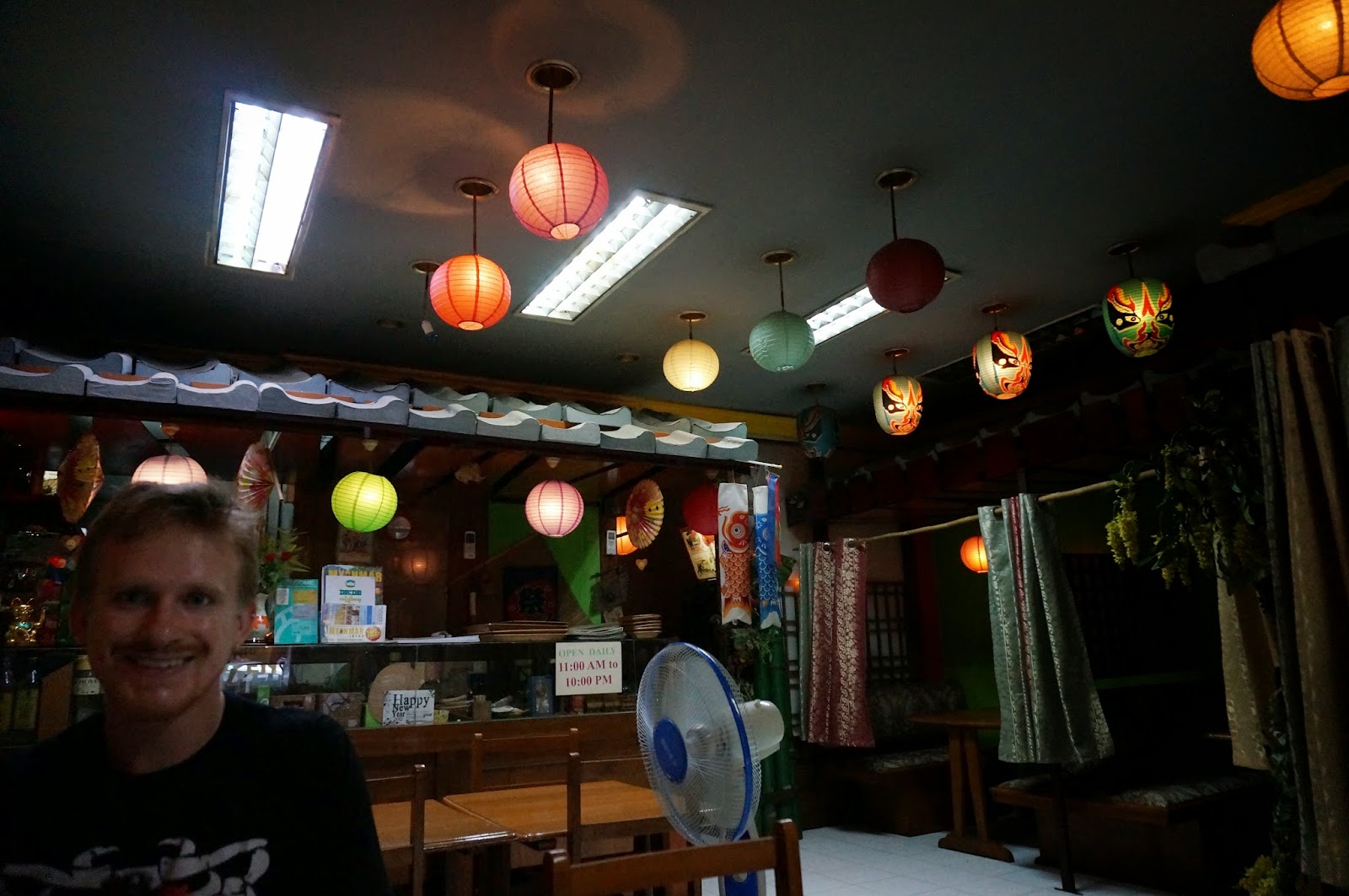
Aside from all the sites, it was wonderful to get to drive through the country and see how people live. Sometimes challenging, too, but fascinating. In our efforts to taste-test the three popular beers in Myanmar, we pulled over at a little road side restaurant and cooled off with a draught of Dagon. Beautiful as the countryside was though, we both passed out on the way back to Yangon. Once back in the city, we had sushi at Japan Japan - on the plus side, I'll say it was about as good as we should have expected for Yangon. But that was also the downside. We finished off our evening by perusing a grocery store, where we purchased 6 packs of ready-to-mix lephet thoke and 'Snow Lover Cracker Ice Cream Funnels' (Myanmar's version of a Cornetto)
Japan Japan - whatever the food was like, the decor was great!